

Updated May 2026
Chihuahuas often get labeled as “yappy,” nervous, or aggressive, but most of the time those behaviors come from fear and lack of proper socialization — not because they’re “bad dogs.” A well-socialized Chihuahua can be friendly, confident, adaptable, and surprisingly brave for such a tiny pup.

The key is helping your Chihuahua feel safe while slowly introducing them to new people, sounds, places, and experiences in a positive way.
And despite what many people think, socialization isn’t just for puppies. Adult and rescue Chihuahuas can absolutely learn to become more comfortable and confident, too.
What Does Socialization Really Mean?
Many people think socialization means forcing a dog to meet everyone they see. It doesn’t.
Proper socialization means helping your Chihuahua learn that new experiences are safe and nothing to fear. The goal isn’t to create a dog that wants to greet every person and dog they see. The goal is to create a dog that can calmly exist in the world without panic, fear, or reactivity.
Good socialization helps prevent:
- Fearfulness
- Excessive barking
- Aggression
- Anxiety
- Separation issues
- Overprotective behavior
- Fear of grooming or vet visits
Why Chihuahuas Often Struggle With Socialization
Chihuahuas are tiny dogs living in a very large world. Things that seem harmless to us can feel scary to them.
Some common reasons Chihuahuas become fearful or reactive include:
- Being carried everywhere instead of being allowed to explore
- Rough handling from children or strangers
- Bad experiences with larger dogs
- Lack of exposure during puppyhood
- Owners accidentally encourage fearful behavior
- Being constantly protected instead of being taught confidence
- Genetic temperament traits
Because they’re small, many people ignore their boundaries. A Chihuahua that feels cornered or unsafe may bark, snap, or tremble simply because they don’t know how else to respond.
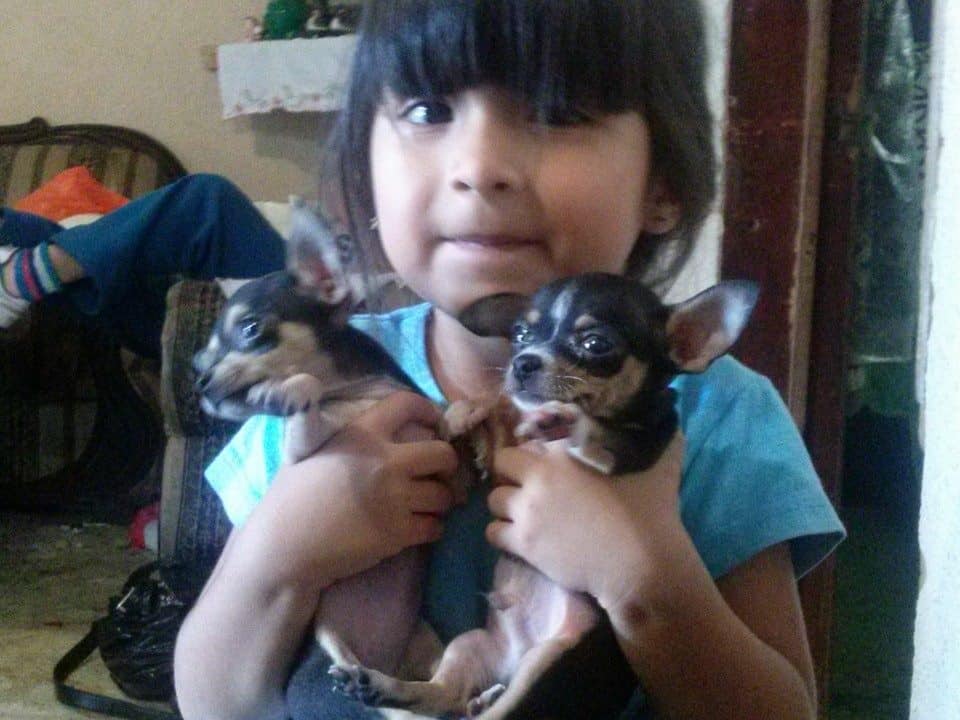
When Should You Start Socializing a Chihuahua?
The best time to socialize a Chihuahua puppy is between 3 and 16 weeks of age. During this time, puppies are especially open to learning about the world around them.
But that does NOT mean older Chihuahuas are hopeless. Adult dogs can still learn confidence and new behaviors with patience and positive experiences.
Start Slow and Keep Experiences Positive
One of the biggest mistakes owners make is overwhelming their Chihuahua.
Instead of:
- Crowded festivals
- Busy dog parks
- Large groups of strangers
start with calm, low-pressure experiences.
For example:
- One friendly visitor at home
- A quiet walk
- Sitting outside a pet store
- Watching people from a distance
- Meeting one calm dog at a time
Give treats, praise, and reassurance during these experiences so your Chihuahua begins associating new things with good outcomes.
2. Socialize Your Chihuahua Safely Before Being Vaccinated
Many puppy owners worry about parvo and other illnesses, and rightly so. But puppies still need safe exposure to the world before they finish their vaccinations.
Safe socialization ideas include:
- Carrying your puppy in public
- Using a stroller or wagon
- Visiting friends with healthy vaccinated dogs
- Sitting outside stores to watch people
- Short car rides
- Exposure to normal household sounds
Avoid:
- Unknown dog parks
- Public potty areas
- Contact with unvaccinated dogs
Always ask your veterinarian what’s safest for your area.
3. Introduce New Sounds and Sights
Many Chihuahuas become fearful simply because everyday things seem unfamiliar.
Expose your Chihuahua gradually to:
- Doorbells
- Vacuum cleaners
- Thunder sounds
- Traffic
- Children playing
- Umbrellas
- Hats
- Bicycles
- Grooming tools
Keep these experiences calm and reward relaxed behavior with treats and praise.
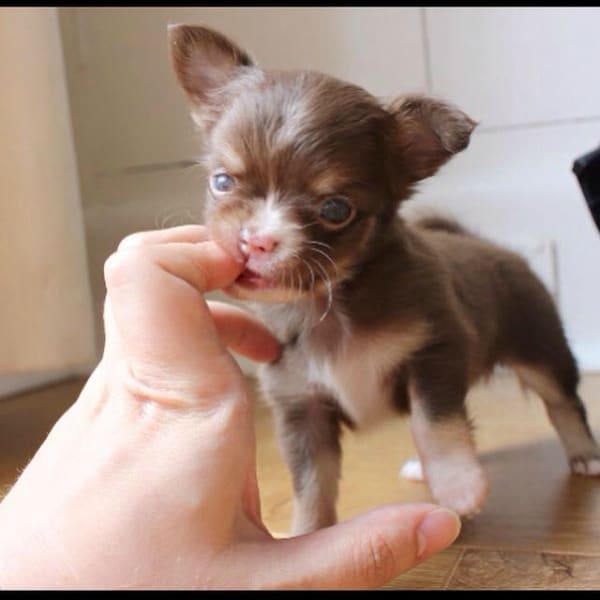
4. Teach Your Chihuahua to Be Comfortable With Handling
Tiny dogs are often picked up constantly, but many aren’t taught how to calmly accept handling.
Practice gently:
- Paw touching
- Ear checks
- Teeth brushing
- Nail handling
- Harness fitting
- Brushing
This helps tremendously with:
- Grooming appointments
- Vet visits
- Nail trims
- Dental care
A Chihuahua that trusts handling is usually far less anxious overall.
You may also like reading about Chihuahua dental care and anxiety in Chihuahuas.
5. Let Your Chihuahua Explore Independently
Many Chihuahua owners unintentionally create fearfulness by carrying their dogs everywhere.
Of course, there are times when carrying your Chihuahua is safest, but whenever possible, allow them to:
- Walk on their own
- Sniff
- Explore safely
- Make choices
- Build confidence
Confident dogs are created through experience.
6. Watch for Signs Your Chihuahua Is Overwhelmed
If your Chihuahua becomes too stressed, learning stops.
Watch for signs like:
- Lip licking
- Yawning
- Trembling
- Tucked tail
- Freezing
- Hiding
- Barking excessively
- Refusing treats
- Trying to escape
If you notice these behaviors, calmly create more distance and make the situation easier.
Never punish fearful behavior. Fear should be handled with patience, not correction.
7. Avoid Forcing Interactions
One of the fastest ways to create fear is forcing your Chihuahua into situations they aren’t ready for.
Don’t allow strangers to:
- Grab your dog
- Loom over them
- Corner them
- Pick them up without permission
Instead, let your Chihuahua approach people at their own pace.
Many Chihuahuas feel safer when strangers:
- Ignore them at first
- Avoid direct eye contact
- Toss treats gently nearby
- Let the dog make the first move
8. Carefully Introduce Other Dogs
Some Chihuahuas love other dogs. Others are intimidated, especially by larger breeds.
Choose calm, friendly dogs for introductions and avoid chaotic dog parks in the beginning.
Good introductions should happen:
- On neutral ground
- With leashes loose
- In calm environments
- At the dog’s pace
Watch body language carefully and keep interactions short and positive.
9. Socializing an Adult or Rescue Chihuahua
Many rescue Chihuahuas come from difficult situations. Some may have spent years isolated, neglected, or poorly socialized. Others may simply have had very little exposure to the outside world.
The good news is that adult Chihuahuas CAN improve tremendously with patience.
The biggest mistake people make with rescue dogs is trying to rush the process.
Your Chihuahua may need time to:
- Learn to trust
- Feel safe in your home
- Adjust to new routines
- Become comfortable with strangers
- Understand that the world isn’t dangerous
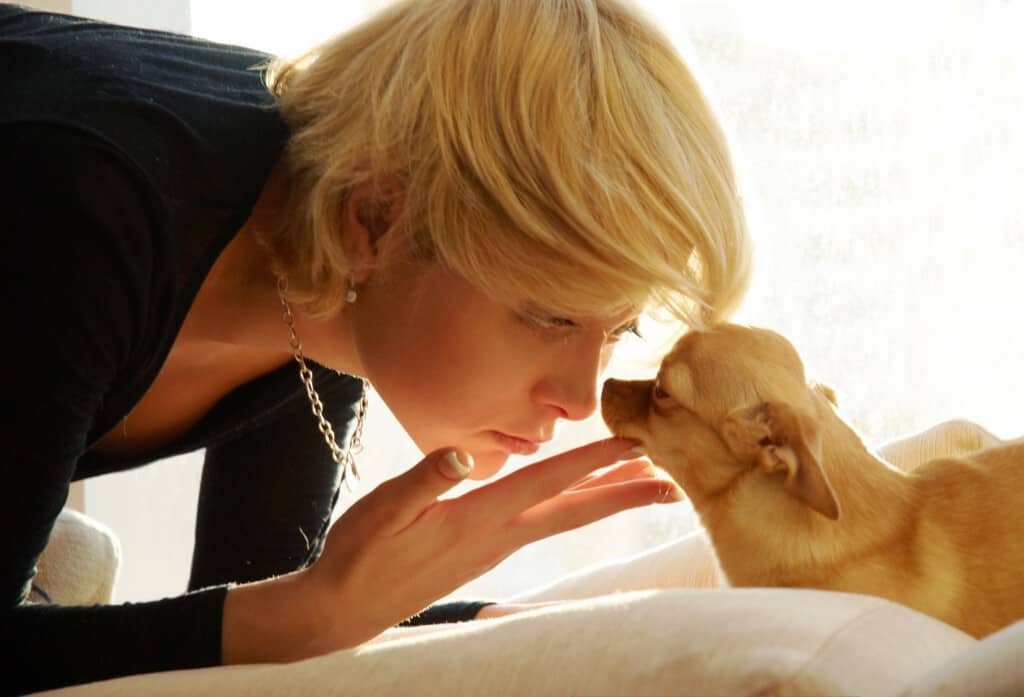
Start With Trust First
Before focusing on meeting strangers or dogs, help your Chihuahua feel secure with YOU.
Create a predictable routine:
- Consistent feeding times
- Quiet sleeping area
- Gentle handling
- Calm voice
- Positive reinforcement
Let them approach things at their own pace.
Use Distance to Reduce Fear
If your Chihuahua reacts to people or dogs, don’t force close interactions.
Instead:
- Stay far enough away that your dog stays calm
- Reward calm behavior with treats
- Slowly decrease the distance over time
This teaches your Chihuahua:
“Scary things predict good things.”
Celebrate Small Wins
For fearful rescue Chihuahuas, progress may look small at first.
Examples:
- Walking past someone calmly
- Accepting treats outdoors
- Exploring a new room
- Relaxing during walks
- Looking at another dog without barking
These are BIG victories for anxious dogs.
Don’t Expect a Social Butterfly
Some Chihuahuas may never love crowded environments or constant interaction, and that’s okay.
The goal is confidence and comfort — not forcing your dog to become someone they’re not.
Common Chihuahua Socialization Mistakes
Avoid these common mistakes:
- Forcing interactions
- Taking puppies to dog parks too early
- Carrying the dog constantly
- Punishing fearful behavior
- Allowing rough handling
- Overwhelming the dog
- Skipping socialization after puppyhood
- Comforting panic in an overly emotional way
Stay calm, patient, and consistent.
Chihuahua Socialization Checklist
Try exposing your Chihuahua positively to:
- Men with beards
- People wearing hats
- Children
- Car rides
- Vacuum cleaners
- Fireworks sounds
- Thunder sounds
- Grooming tools
- Friendly dogs
- Different floor textures
- Elevators
- Strollers
- Bikes
- Delivery people
- Doorbells
- Walks in new places
Keep experiences short, calm, and rewarding.

Final Thoughts
Socializing a Chihuahua isn’t about turning them into an outgoing party dog. It’s about helping them feel safe and confident in the world around them.
With patience, positive experiences, and gentle guidance, even nervous or rescue Chihuahuas can make incredible progress over time.
Some dogs move quickly. Others need months of slow confidence-building. That’s okay. The important thing is helping your Chihuahua feel secure, understood, and supported every step of the way.
FAQ
At what age should you socialize a Chihuahua?
The ideal socialization period is between 3 and 16 weeks old, but Chihuahuas of any age can still benefit from positive socialization experiences.
Can an older Chihuahua still be socialized?
Yes. Adult and rescue Chihuahuas can absolutely become more confident and comfortable through slow, reward-based exposure and patience.
Why is my Chihuahua aggressive toward strangers?
Fear is one of the most common reasons Chihuahuas bark, snap, or act aggressively toward strangers. Proper socialization and confidence-building can help reduce this behavior.
Should I take my Chihuahua to dog parks?
Dog parks can overwhelm some Chihuahuas, especially puppies or fearful dogs. Controlled one-on-one interactions with calm dogs are usually safer and more effective.
How do I socialize a fearful Chihuahua?
Start slowly, use treats and praise, avoid forcing interactions, and reward calm behavior. Let your Chihuahua move at their own pace.
Is it normal for Chihuahuas to be nervous?
Many Chihuahuas are naturally cautious because of their tiny size, but proper socialization can help them become much more confident and relaxed.

Cathy Bendzunas
Pet Blogger

I started training spanky at 6 weeks, he knows no strangers, he doesn’t bark unless a car he does not recognize pulls in drive or someone he don’t know knocks on door, I wouldn’t let him do that yapping bark right from the start, only time he bites which just a nibble is while playing , but I can say we don’t bite and he stops and starts licking you lol, he is a precious baby boy , no one believes he is a chi because of the way he acts, he was well trained
I love his name! He sounds like our sweet girl Pinky. She is just a tiny lover!
My chi Linus is 8 weeks and is now starting to bark at everything any advice on training him
Linus is adorable!
We do have an article on barking here: https://ilovemychi.com/chihuahua-barking/
I can also ask on Facebook if you want some more ideas.
@Debbie, my Louie is the same way if he starts to play bite on my hands I just tell him no bite we don’t do that here and you can tell it’s killing him inside not to but he does stop. Sometimes he’ll push it just to see if he can be boss but I just raise my voice a tiny bit and he stops.
You raised him well Debbie!
I’ve done all of these things, the one thing I do if I want my boy chi to get to know someone in particular is, have them over to the house, and after they’ve been there for a bit, I pick him up, and place him gently into their arms, but I stay there until I know he feels comfortable with the person. Then I sit down and let him know it’s ok. He is a sweet boy, but is weary of people he doesn’t know. Once he gets to know someone he is fine.
Good idea Cynthia.
I have been following the rules of 7, sort of by accident. So far, my 12 week old Cortez is doing pretty good. I also have a Yorkie and 2 cats. They are getting along pretty well. The one tip I wanted to share is about Potty Training. I set my kitchen timer to 2 hours so that I do not forget to take him out. I think having a dog that is already potty trained helps also.
I put him in a booster seat with the Yorkie right now. I make them share toys and treats. I am fussing at him when he nips while playing.
So far, no barking. My Yorkie is pretty quiet for the most part. Sometimes, she thinks she sees something in the backyard and starts barking. I just make her come back inside.
I do not want a barking, nipping, aggravating dog – so I am working very hard right now to do the right things. I think most of it is common sense.
Thanks very much for these ideas.
It sounds like you are doing all the right things Karen. Good idea about the timer too.
I got my precious Allie 3 years ago from a Rescue shelter. She was already 2 years old. She has never played with toys and we have tried to introduce her to them several times. She will have no part of it. She also does not play a lot. I run with her when I take her outside, to get her some exercise. But she is just happy to sit in my lap under a warm blanket. She’s very happy, I do worry about her not wanting to play.
Some dogs just don’t like to play. My Kilo didn’t although she did have a stuffed toucan she had from when she was a puppy that she liked to sleep with every night. As long as Allie seems happy, I wouldn’t worry about it.
Thanks, Kathy!
These sound like very good tips. I have a 7 week old Chi named luffy. He is very fun and playful with my kids and husband but tends to react with any strangers. My friends brought there older dog and new puppy over for a visit but luffy stayed in my armpit the whole time. I tried to put him down and he became frantic. I hope he will become better with other dogs in time with repitition.
He should Elysia with time.
I just took in a 10 year old Chi whose person died. He was NOT properly socialized and is a mess — constant barking, nipping at people he doesn’t know (he has no teeth), fearful, territorial, food aggressive. Any tips for undoing what his previous owner did? Is it possible to reform such an old dog? Old dog, new tricks?
Yes, with time, patience and training he can be reformed. He may need some advanced training from a dog behaviorist.
If you want me to post your situation om the facebook page and ask if anyone has some specific tips, I can do that.
I would like to see that post on FB also. I have a two year old rescue and she is a sweetheart with us but very aggressive when outside and sees neighbors. She is aggressive when anyone comes into the house. Im frustrated
I just posted your question Jeanne. Here’s the link: https://www.facebook.com/ILoveMyChihuahuaClub/photos/a.329156097212839.1073741828.328096963985419/1229932363801870/?type=3&theater
I had the same issue with my pup… When I got her as a pup she wasn’t around many people and yes and no it was my fault.. I didn’t have transportation because I don’t drive… But when I moved in with my cousin when she was 10 months old I put her in training class at petsmart and that helped a lot with being around different dogs and people as well… But also at my cousins there is always someone coming over to visit… She use to bark so much and when someone would come over she would bark so much to were I would have to lock her up in my room now… Now she is 19 months old and she is so much better because of that class… Now she will bark for 10 mind and then after the other dogs stops barking that she lives… Then she goes lays down…. I hope this helps… I also took her out for walks all the time and when I would walk by someone and if she would get scared I would say it’s okay and reward her… If she gets to pull away from the person I would encourage her to walk pass the person and reward her with a great for that as well and when ever someone would come over I would have them give her treats as well… Either chicken or training treats or your pups favorite treat
Good info Tamee
I have a chi mix that is a rescue and she just goes nuts when we bring in any mew dogs into our place. I broght her to meet the dogs first but now she just goes nut for no reason at all any advice. She is 7 years old now
So when she meets the dogs at their place or neutral ground, how does she behave?
You may just want to work on her getting used to other dogs in areas other than your home first before you work up to having other dogs in your home.
I can post your question on the facebook page for more tips if you want Amy.
How can I get my almost 9 year old chi. Accustomed to having our 15 week old chihuahua in the house now. Ex. The 9 year old runs when the little 15 week old comes by her. She also sometimes growls at the lil one too.
It may take up to a few weeks but usually they will start to bond with each other Amy.
We have an article on this. The first part won’t apply to you since you already have your new pup. Just read the second part. https://ilovemychi.com/how-to-introduce-a-new-pet-to-your-chihuahua/
Mine is a 7 yo. I rescued him at 5 years of age. Had been living as a stray. He was gonna be euthanized and my 5 yo female had passed unexpectedly 2 weeks prior. He was afraid of everything but is coming along well.
That’s great Janet. It just takes time and patience.
I share my life with an 8 year old Jack, and two 14 month old chis my question is about the training work. Shall I take them out individuall, or work with them together?
It kind of depends on them. Eventually you will want to walk them together so you do want to train them together. But if one is constantly distracting the other, maybe start training one at a time and then later on train together.
I had a 16 yr old little chi and sh loved to go everywhere I went and loved everyone she met. I’ve never seen another as outgoing and sweet as she was. I lost her almost 3 yrs ago and I just got a little Pomeranian at 8 weeks old and she is now almost five months old her name is Evie and she is becoming a very sweet social girl like my Khole was. It takes time and consistency with them and they will learn. Just stay patient.
Good points Sharon.
I have a 4yr old chi who loves us so much! She is happiest sitting on our laps with blankets. But when someone comes over and they want to pet her, she growls, never bites tho. I want her to behave with others and other dogs, ant suggestions?
Some dogs are just a little shy and Chis in particular don’t care for strangers petting them.
To help your girl accept others easier, you could keep a few small treats in your pocket and get the stranger to offer a treat to your dog. Have them offer it in their open hand. After eating the treat, your dog may be more open to accepting petting.
Also before they go to pet your dog, they should allow her to smell their closed, palm down hand. That’s the most non threatening position.
I have a chi that is almost 2 years old & have had him for almost a year. He was a rescue dog or abandoned & my neighbor had him for a few weeks before I adopted him from her. She has several chis & great with dogs she’s been around them all her life. My chi Boudro is so loveable & playful at home with his sisters & my husband. He is the cutest thing ever. He does a lot of the 7 steps already. I’ve taken him to the beach as a puppy he was around several people no barking & was the life of the party! He goes outside fine, he goes to doggy park & does fine but the minute a person walks by the car or if a person comes the door at our home he goes absolutely crazy! He also bit my daughters friend on her arm when he walked into her room & saw her sitting on my daughters bed. He rides in the car all the time windows down & all but the minute a person moves on closer to car or just walking by he’s growling hard inside of his mouth & going crazy. I don’t like the fact that I now have to put him up when I have company over. I also feel chis do this when it’s a singular person approaching rather than taking your chi out around a group because they don’t know which one to bark at! LOL
It sounds like he is being protective and he probably thinks he is doing his duty to keep yall safe. We do have an article on barking: https://ilovemychi.com/chihuahua-barking/ and biting: https://ilovemychi.com/how-to-stop-dog-biting/ but he may need help from a dog behaviorist.
My chihuahuas Alfie and Eva are the best little dogs I have ever known, they absolutely love meeting people and are very joyful and loving to everyone, they never snap growl or bite even when little children swarm around them, they are so calm and friendly, they barely bark only when the door goes, sweet adorable dogs I rescued when they were 6 years old, they obviously were well socialized
They are freaking adorable too Angela!
Our Chihuahua was potty box trained at a very early age we would out her in the kitty box to go potty. She lived almost 16 years and was inside and outside trained.
That’s great!
That’s wonderful! Did you use kitty litter in the box?
I have 2 small Chihuahuas that are now classified as Emotional Support Dogs. Knowing that made the socialization training very critical. We drove to areas away from our house and then walked around the area. We went to the schools when the students were outside, using a dog purse carrier they went every where with me. We rode on the bus, we went for walks around the stores etc. They are great companions. I suffer from extreme PTSD. When we are out and about they sense when I’m anxious and about to have a panic attack and let me know (most times- bed I didn’t realize I was close to having attack).
One is a I male and the other one is female. They weigh 4-5 lbs. The dog purse looks more like a woman’s large purse. Most of the time people don’t realize I have a dog with me.
They don’t react to their surroundings with one exception – the male is very protective of me. At home and outing if he thinks I’m in danger he will bark. He knows and accepts both of my sons unless they start to give me a hug (pre COVID) then Frankie charges them and will nip at their ankles. Worked hard with that one and it took a lot of patience and time. Frankie still reacts to his interpretation that I’m in danger but he doesn’t bark! His hair gets stiff and goes into high alert! At home he keeps a close eye and stays very a close to me. He follows visitors and tries to “herd” them to the front door.
Two times a month I take them to see residents in the rest homes. They enjoy the attentions of the residents and the residents are happy to see them! Haven’t done that since the middle of January because of the virus.
I love your story Connie and glad you have your little buddies to see you through the hard times.
I’m curious, how did you get your male to stop barking?
Hi there! What I don’t understand well is how to do all this socializing when the dog vaccine schedule finishes at 14 weeks. So not sure how to socialize my chihuahua puppy if at 7 weeks it only has its first shots. Is it safe to expose the puppy to all of those things without more vaccines? Or Should I make her vaccine schedule shorter and get her all vaccines I have faster than 14 weeks? 😫 help!
No, don’t speed up the vaccines. small dogs can have issues with vaccines and they need the time between them to recover.
If you have any friends or family with friendly dogs that are uo to date with their vaccines, then invite them for a play date with your puppy. Otherwise, just wait until he’s fully vaccinated.
How do I use kitty litter for my 8 week old chihuahua when in the house. He goes on the grass outside but it is too cold to do this in the winter
Litter works for a few dogs but most don’t like the feel of it under their paws. I use something called Doggie Lawn. It’s like a mat of real grass sent to you once a month. It isn’t as cheap as kitty litter but my dogs do like it (2 of them do anyway, the 3rd prefers potty pads).
I actually don’t have a chihuahua yet, and I won’t for a while, but I’m trying to be as prepared as possible. I’m hoping for an ESA and I feel like I’ve made the right choice breed-wise. But I’m a little worried because, while I’d like to start with a puppy so socialization is easier, I know it’s better to find a reputable breeder but there aren’t any in my state, and due to being on SSI for mental disability I’m not sure if I could spend more than a little over $1000 on a puppy (though I’d like to be off it by 2023.)
I also worry that, since they are very sensitive to the stress of their owners, that my anxiety and depression might actually affect a chihuahua negatively (I’m autistic with ADHD, anxiety, depression and trauma) but if I can I’d be willing to better myself so that doesn’t happen.
Any insight on that? Thank you for all the information on your website. I know that it’ll be useful for me in the coming months. I want to be able to give the very best care and life to my chihuahua and your posts have certainly helped me learn how I might do that. 🙂
Your dog will be affected by your moods because they are very in tune with us but it’s usually a positive thing. I know when I’m upset, my dogs sense it and try to make me feel better. Dogs are great for people with your issues and chihuahuas, in particular, seem to be very good with them.
@Cathy, Thank you very much! That’s very encouraging. I appreciate your reply.
We have a 7 month old chihuahua girl. We got her at 8 weeks and introduced her straight away to our three grandkids all under 5. Aswell as outings daily in the car shopping and parks, be it in our arms pre-vaccines. Now we have the most sociable furry girl, loves adults, kids, in particular toddlers. She plays in the paddling pool and even plays football of sorts! She is our 2nd chi we lost a 14yr old before her. We made the mistake before of being so anxious of her size pre-empting danger. We did not realise then our negative energy and being fearful of exposing her to all experiences at 8 weeks on, made her timid and nervous. She was a lovely girl, not aggressive but anxious with other dogs and strangers. My advice, is don’t make our mistake don’t be over protective, let them try everything – under supervision of course, and you’ll help to nurture a more secure,friendly and loving furry companion
Good advice Susie!
My Chi was anything but high strung. He was the most beautiful golden tan, big expressive eyes, and sooo darn loving/affectionate; friendly to ev one and all creatures!!! Had to give him to 2 little boys 2 and 4. He sleeps with the 2 yr old…sweet! He was very playful and kept jumping on my husband when he was taking a nap. He just wanted to play…ha. My husband is suffering from Dementia…I caLL AND CHECK UP ON HIM ON A REGULAR BASIS…I SO LOVED THAT PUPPY !!!
I’m glad he’s doing so well and has kids to play with.
Bubbalouise loves other dogs,thanks to Petsmart puppy classes. She now has a great time with other dogs at the dog park now the weather has improved some days.
Our socialization with people is going a lot more slowly.
Yes early socialization helps so much! I’m glad you got her that training.
your pretty girl Lucy is a work of art.
Her photos are beautiful!
Thanks Jane! I agree but I know I’m biased.
I made a terrible mistake when I got Louie at nine weeks old due partly to health reasons I was going through anyway I did not socialize him at all it’s always been just him and I because my husband works so much. He is now seven this year and he absolutely hates other people and other dogs is it too late for Louie to be socialized now? We would like to rescue another dog but we’re afraid it just won’t work for him this boy lives like a king and is extremely spoiled ! He is a big mommas boy and is so protective of me. I love him so much I literally cry when I talk about him I can feel my heart it’s hard to explain we have such a close bond. If it’s too late then it’s something we’ll accept. Any advice would be greatly appreciated. Oh he won’t let anyone in the house if they’re a stranger to him so we have to put him in our bedroom.
It’s not too late but it won’t be easy. If you have a friend with a small dog, you can start the process by taking him for a walk with the friend and their dog to get him used to other dogs. Do it on a regular basis. You can also take him to a small dog park when he gets used to the friend’s dog. Eventually you want to work up to having people and other dogs in your house but take your time.
I have had the sweetest, best, love everyone, nicely trained Chihuahua for 16 years. She just developed AFIB and we are working through all of her issues with that… heartbreaking. I would say from the beginning I decided to treat her like ever other dog we have had. I did not pick her up to go outside… to house train, I called her to the door, had her sit, open the door and let her out. She learned to sit at the door to go outside. She learned obedience commands just like our Springer and I was successful in training her to be a Service Dog to visit hospitals. Nurses love her as he does not walk on hospital floors before visiting a patient. I do not know if I was lucky because I adopted her from a shelter or training worked but our family has loved and been so lucky for her to love us.
She sounds wonderful Carolina. I think shelter pets often are so appreciative of being adopted that they do their best to be a model pet.
I loved your tips on socializing Chihuahuas! My little Bella was so shy when I first adopted her. It took consistent play dates with calm dogs and the right environment to build her confidence. Now, she struts around like she owns the park! Your advice about taking it slow really resonates—it’s all about their comfort level, isn’t it?
Yes it is.