

updated September 2026
Fall may be one of the best times of year to be a dog owner. The weather finally cools down, the leaves change color, and walks become much more enjoyable for both you and your pup.
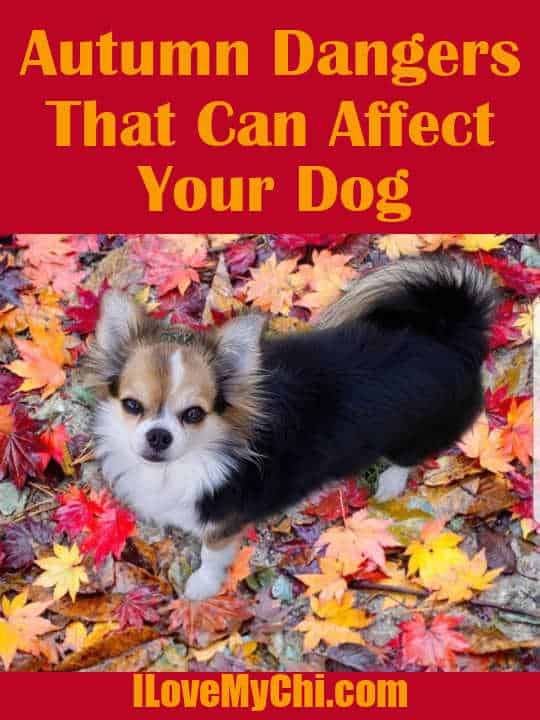
And if you have a Chihuahua, it’s also the season when all those adorable little sweaters start coming out of the closet!
But autumn brings a few hazards along with the cooler temperatures and beautiful scenery. Some are obvious, while others are things you may never have thought about.
Here are some of the most common fall dangers for dogs and simple ways to keep your pup safe while still enjoying everything the season has to offer.
1. Antifreeze
Fall is a common time for people to check their vehicles and prepare them for colder weather, which means antifreeze may be sitting around garages and driveways.
Traditional antifreeze containing ethylene glycol is extremely toxic to dogs. Even a relatively small amount can cause serious poisoning and kidney failure.
Clean up spills immediately and store containers where your dog cannot reach them. Don’t assume a puddle in a driveway or parking area is simply water, either.
Some antifreeze products use propylene glycol instead of ethylene glycol. These are considered less toxic, but that doesn’t mean they are completely harmless to pets.
If you suspect your dog has licked or swallowed antifreeze, don’t wait for symptoms to appear. Contact your veterinarian or an emergency veterinary clinic immediately.
2. Wild Mushrooms
Cooler temperatures and damp fall weather can bring mushrooms popping up seemingly overnight.
Most mushrooms have little or no toxicity, but some varieties can cause severe or even life-threatening poisoning. Unfortunately, it can be extremely difficult to tell a dangerous mushroom from a harmless one just by looking at it.
That’s why the safest rule is simple:
Don’t let your dog eat wild mushrooms.
Check your yard regularly and remove mushrooms before your dog finds them. On walks, pay attention when your pup starts investigating something growing along a trail, under trees, or in damp grassy areas.
If your dog eats an unidentified mushroom, contact your veterinarian or a pet poison control service promptly. If possible, safely take photos of the mushroom and surrounding area, since that information may help with identification.
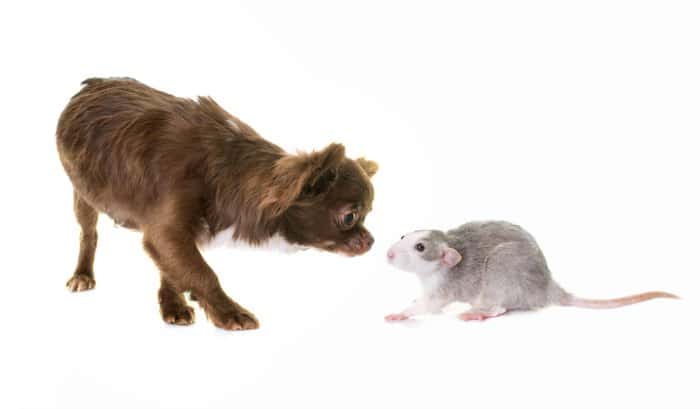
3. Rat and Mouse Poison
As temperatures drop, mice and rats begin looking for warm places to spend the winter. Unfortunately, that often means garages, sheds, basements, and homes.
That also means people tend to use more rodenticides during the fall.
Rat and mouse poisons can be extremely dangerous to dogs, and different types of rodenticides cause different kinds of poisoning. Don’t assume you can recognize the symptoms based on something you’ve read online.
If you use rodent control products, make absolutely sure your dog cannot access them.
And remember that Chihuahuas are tiny. Places that might seem safely tucked away from a larger dog may still be accessible to an adventurous little Chi determined to investigate.
If you suspect your dog has eaten rodent poison, contact your veterinarian immediately and, if possible, take the product packaging with you.
4. Fall Allergies
Spring isn’t the only allergy season.
Fall can bring its own assortment of environmental allergens, including pollen, mold, and other substances that may cause problems for sensitive dogs.
Signs can include:
- Itchy or irritated skin
- Excessive licking or chewing
- Red paws
- Frequent scratching
- Ear problems
- Watery eyes
- Sneezing
Mold can also develop in damp piles of fallen leaves, so a dog who loves charging through leaf piles may come into contact with plenty of environmental irritants.
Of course, itching doesn’t automatically mean your dog has seasonal allergies. Fleas, skin infections and other medical problems can cause similar symptoms.
If your Chihuahua seems unusually itchy or uncomfortable, it’s worth checking with your veterinarian.
Read this for more info about allergies: Allergies in dogs
5. Ticks Are Still Around
Don’t pack away your tick-prevention routine just because summer is over.
Ticks can remain active during the fall and, depending on where you live and the weather, may continue to be a concern well into cooler months.
Fallen leaves, tall grass, brush, and wooded areas can all provide good hiding places for ticks.
After walks or outdoor adventures, check your dog carefully, especially around:
- Ears
- Neck
- Armpits
- Between the toes
- Groin
- Around the tail
With a Chihuahua, you’ve got one advantage: there’s a lot less dog to inspect!
6. Wildlife and Snakes
You and your dog aren’t the only ones enjoying cooler fall temperatures.
Wild animals may be more active as they search for food or prepare for winter. Depending on where you live, that could mean encounters with snakes, raccoons, skunks, coyotes or other wildlife.
Keep your dog close when walking through wooded or brushy areas, particularly if your dog tends to investigate holes, piles of leaves or places you can’t clearly see.
This is especially important for Chihuahuas and other toy breeds. Their small size can make an encounter with a larger animal particularly dangerous.
If your dog is bitten by a snake, don’t try home remedies. Seek veterinary care immediately.
7. Leaf Piles and Yard Debris
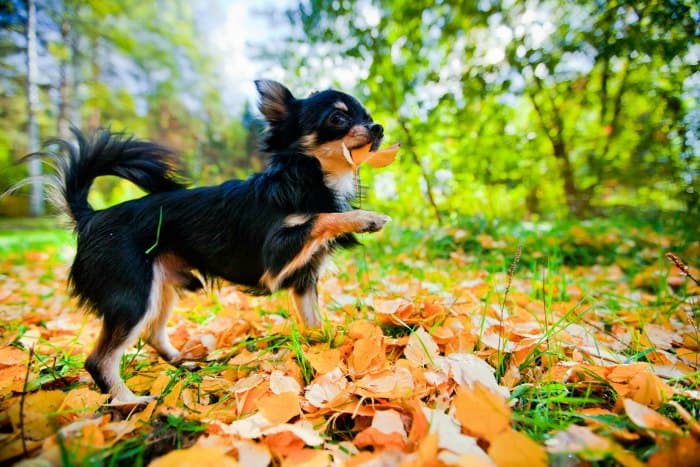
I know. Jumping into a huge pile of crunchy leaves looks like the ultimate fall dog activity.
And most of the time, it’s perfectly fine.
Just remember that leaf piles can hide things you don’t necessarily want your Chihuahua finding, including sticks, sharp objects, mushrooms, ticks and wildlife.
Wet piles of decomposing leaves and other organic matter can also develop mold.
Let your dog have some fall fun, but check the area first and supervise the festivities.
And yes, take pictures. A Chihuahua buried in autumn leaves is practically required.
8. Compost Piles
If you’re cleaning up your garden or yard before winter, be careful with compost.
Decomposing food and organic material can contain molds that produce toxins capable of making dogs seriously ill. Compost may also contain foods that are dangerous to dogs in their own right.
Keep compost bins securely closed and prevent your dog from rummaging through open compost piles.
9. Cooler Temperatures
Many dogs absolutely love the cooler temperatures of autumn.
Your Chihuahua may have a slightly different opinion.
Because of their small size, Chihuahuas can lose body heat more quickly than larger dogs, and many Chis aren’t exactly shy about letting us know when they’re cold.
Long-haired Chihuahuas may tolerate cool temperatures somewhat better than smooth-coat Chihuahuas, but every dog is different.
Watch your dog rather than relying solely on the temperature outside.
Signs your Chihuahua may be getting too cold include:
- Shivering
- Hunching or curling up
- Lifting paws off the ground
- Reluctance to walk
- Trying to turn toward home
- Seeking warmth or trying to be held
A sweater or coat can help on chilly walks, particularly for puppies, seniors, very small Chihuahuas and dogs with thin coats.
Just make sure clothing fits comfortably and doesn’t restrict movement.
10. Shorter Days Mean Darker Walks
One fall hazard that’s easy to overlook is simply the loss of daylight.
As the days get shorter, morning and evening walks may happen in low light or complete darkness.
That can make a tiny Chihuahua especially difficult for drivers, cyclists and other people to see.
Consider using reflective gear, a reflective leash or collar, or a small pet-safe light when walking after dark.
And even if your dog is normally reliable off-leash, keeping them leashed near roads is especially important when visibility is poor.
11. Back-to-School Supplies
If you have children or grandchildren around, fall often means backpacks, pencils, markers, glue sticks and other school supplies scattered around the house.
Many common school supplies aren’t highly toxic, but they can still cause stomach upset or even an intestinal blockage if swallowed.
With such a small dog, even relatively small objects can cause problems.
Get everyone into the habit of putting backpacks and supplies somewhere your Chihuahua can’t reach them.
12. Halloween Candy
Halloween is great fun for us.
For dogs? The giant bowls of candy are considerably less helpful.
Chocolate can be toxic to dogs, with darker and baking chocolates generally posing greater risks because they contain higher concentrations of the compounds responsible for chocolate toxicity.
Another serious concern is xylitol, a sweetener sometimes found in sugar-free candy, gum, and other products. Xylitol can cause a dangerous drop in a dog’s blood sugar and may also cause serious liver problems.
Candy wrappers can create another hazard if swallowed.
Keep Halloween candy somewhere your dog absolutely cannot access it—not simply pushed toward the back of the kitchen counter.
If your dog gets into Halloween candy, determine what was eaten and how much, save the packaging if possible, and call your veterinarian or pet poison control for guidance.

13. Halloween Decorations and Costumes
Candy isn’t the only Halloween hazard.
Electrical cords, candles, glow sticks and small decorations can all cause trouble for curious pets.
Costumes deserve a little attention too.
I know Chihuahuas can look ridiculously cute dressed as pumpkins, witches and tiny superheroes. If your Chi enjoys dressing up, have fun!
But costumes should never restrict breathing, vision, hearing or movement. Remove anything your dog could chew off and swallow, and don’t force a costume on a dog who is clearly uncomfortable wearing it.
Also watch the front door. Trick-or-treaters coming and going all evening create plenty of opportunities for an excited or frightened dog to slip outside.
If your Chihuahua is nervous around strangers or doorbells, a quiet room away from all the activity may be a much happier place to spend Halloween evening.
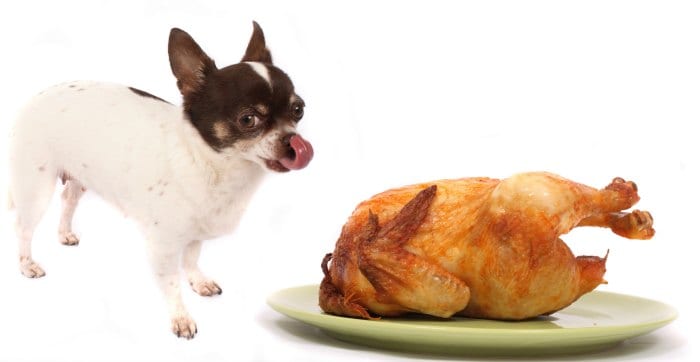
14. Thanksgiving Foods
By Thanksgiving, fall is winding down, but there’s one last major collection of dog hazards—the dinner table.
Some plain Thanksgiving foods can be shared safely in small amounts, but many traditional dishes contain ingredients dogs shouldn’t eat.
Keep your dog away from:
- Cooked bones
- Onions and garlic
- Grapes and raisins
- Chocolate
- Foods containing xylitol
- Alcohol
- Raw yeast dough
- Very fatty foods
- Heavily seasoned dishes
Fatty foods can cause digestive upset and may contribute to pancreatitis in susceptible dogs.
If you’d like your Chihuahua to join the celebration, set aside a little plain, dog-safe food before adding butter, sauces, onions, garlic, or seasonings.
Trust me, your Chihuahua will not complain that her turkey lacks rosemary and sage.
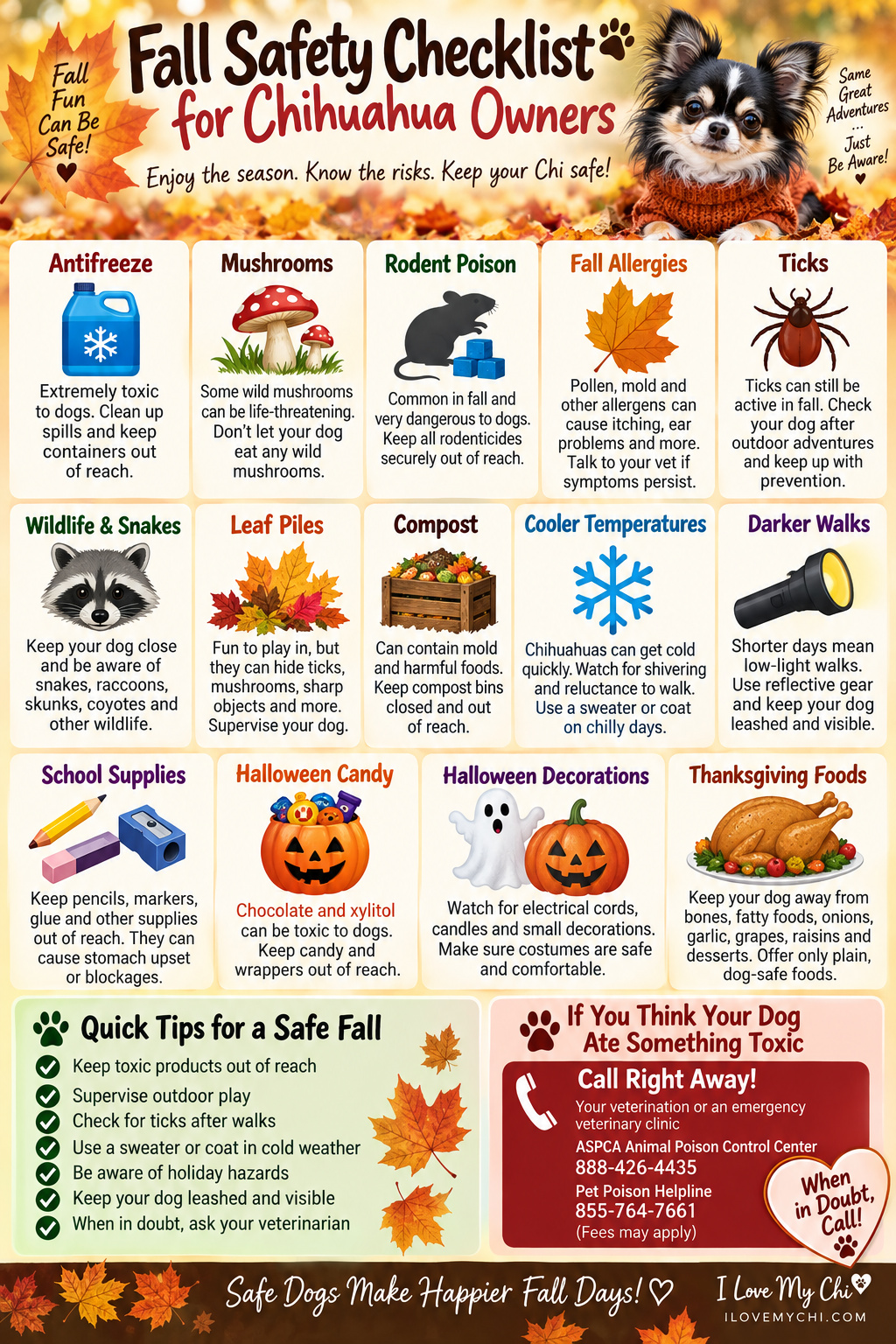
What If Your Dog Eats Something Toxic?
If you think your dog may have eaten antifreeze, rodent poison, a toxic mushroom, xylitol, chocolate or another potentially dangerous substance, don’t wait to see whether symptoms develop.
Call your veterinarian, an emergency veterinary hospital, or a pet poison control service right away.
Two resources to keep handy are:
ASPCA Animal Poison Control Center: 888-426-4435
Pet Poison Helpline: 855-764-7661
Fees may apply when using poison-control services.
It’s also helpful to have the following information ready:
- Your dog’s weight
- What your dog ate or was exposed to
- Approximately how much
- When it happened
- Any symptoms you’re seeing
Keep the package, label or container if one is available.
And don’t induce vomiting or give your dog a home remedy unless a veterinarian or poison-control professional specifically tells you to do so.
Enjoy Fall With Your Chihuahua
After reading a list like this, you might be tempted to wrap your Chihuahua in bubble wrap until December.
Don’t worry!
Fall is a wonderful season to enjoy with your dog. Cooler walks, colorful leaves, cozy evenings, pumpkin photos and, of course, Chihuahua sweaters are some of the best parts of the season.
Most fall hazards are easy to avoid once you know they’re there.
So grab the leash, put on your favorite sweater—and possibly your Chihuahua’s favorite sweater too—and enjoy this beautiful time of year together.
Also Read:
Fruits that are safe for dogs to eat
Vegetables that are safe for dogs to eat


Cathy Bendzunas
Pet Blogger
Love the tips of allergies in the fall and winter months. My Chi isn’t having to much going on but my yorkie is having skin problems. This was helpful for her too.
Glad you liked it Shannon. Hope your yorkie feels better soon.
thank you so much!! I really learn alot, and the fun things!!
thank you so much!! I really learn alot, and the fun things!!
You are very welcome Shirley!